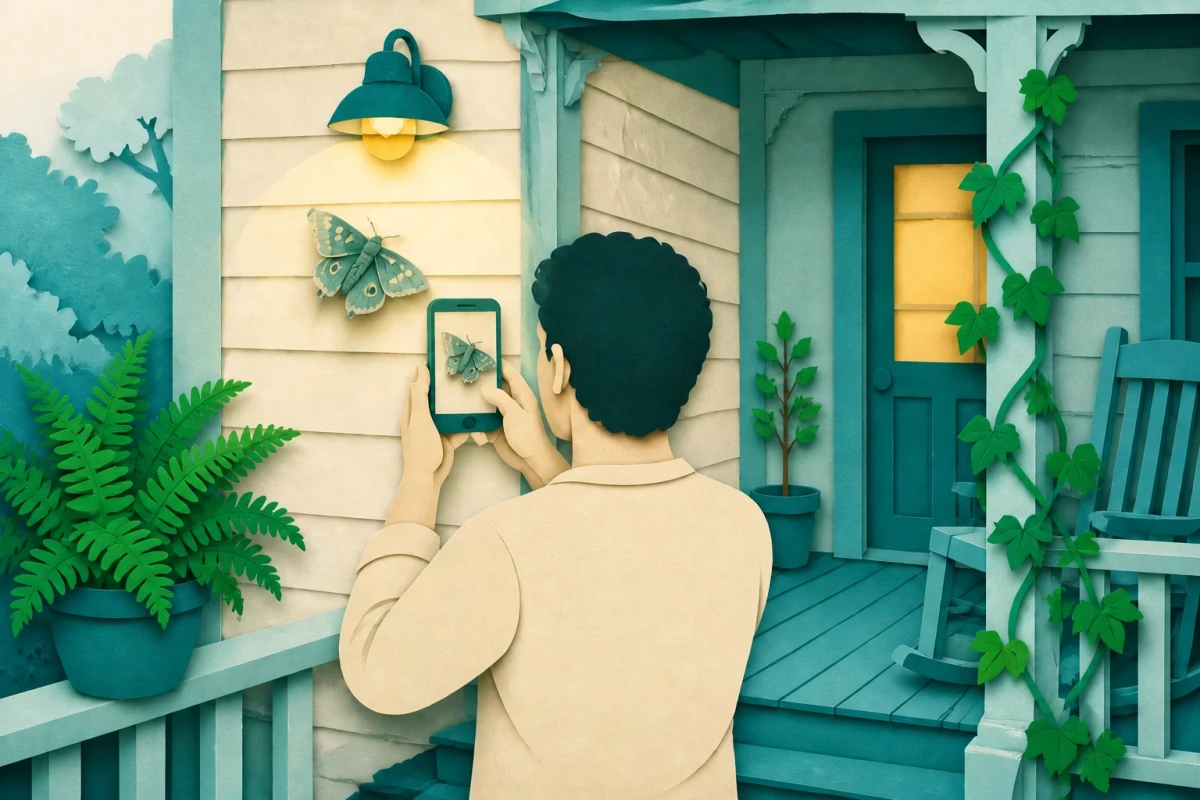
Log one wild plant, bird or insect for science
Photograph whatever's growing or crawling nearby. iNaturalist works out what it is.
Why This Matters
Scientists can’t watch every backyard and creek. A sighting logged with iNaturalist flows into the Atlas of Living Australia, which Victoria draws on when deciding which habitats need protecting.
Take a closer look
What’s living around you right now? A moth by the porch light, a fungus on the nature strip, a weed pushing through a footpath crack, or even just a magpie on the wire. Photograph it and log it in the iNaturalist app.
Around 500,000 Australian species still have no scientific name, and there are almost certainly unnamed insects and fungi living in ordinary backyards. That’s why the small stuff helps most: birds are already well recorded, while moths, fungi and beetles are the records scientists are short of.
And if you come across a sick or dead bird, don’t touch it, and keep pets away. Ring the Emergency Animal Disease Hotline on 1800 675 888 instead. With bird flu now in Australian wild birds, that call is a record that matters too.
How to do this
- Get the free app at iNaturalist Australia.
- First time? Create your free account in the app.
- Find something wild and photograph it, close and steady.
- Check the app’s suggested ID, keep the location on.
- At home, set geoprivacy to obscured. Upload. Done.
Sources: Atlas of Living Australia; CSIRO on citizen science and the atlas’s under-recorded species (2023); Taxonomy Australia on Australia’s undescribed species; Wildlife Health Australia on bird flu in wild birds.
Already a member? Log in